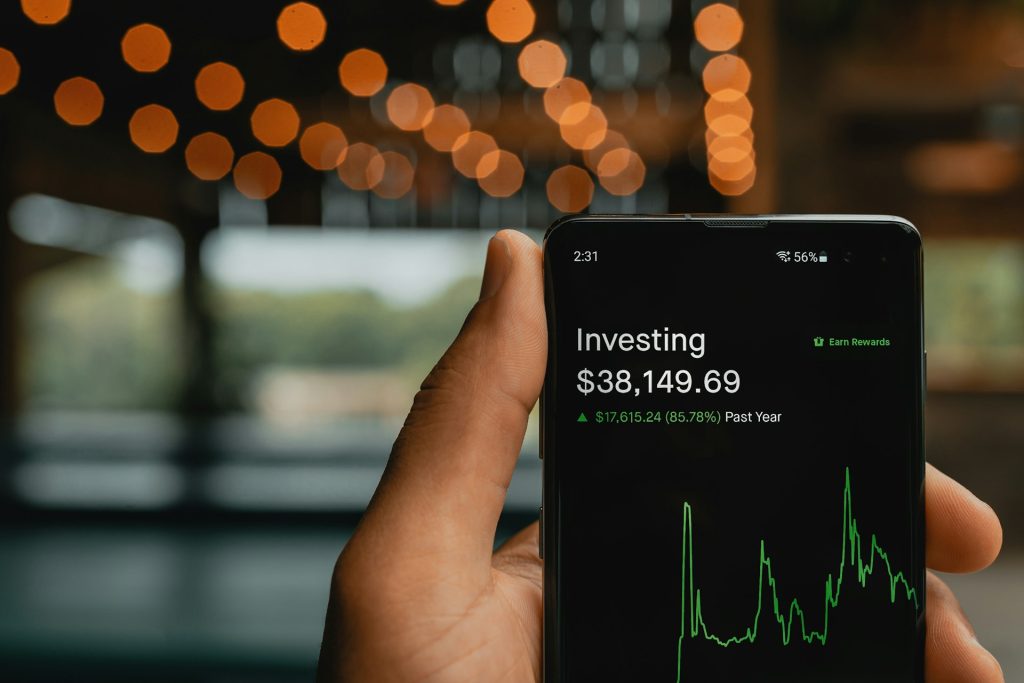
Investing is often portrayed as a high-stakes game filled with rapid trades, dramatic wins, and constant screen-watching. Social media and financial news reinforce the idea that successful investors are always “on,” reacting instantly to breaking news, earnings reports, or market swings. This narrative makes investing feel intimidating, technical, and emotionally exhausting.
In reality, the most effective and reliable way to build wealth through investing looks very different. It’s slower, quieter, and far less stressful. Long-term investing focuses on patience, consistency, and discipline rather than prediction and speed. It’s the approach used by retirement savers, institutional investors, and many of the world’s most successful individuals—not because it’s exciting, but because it works.
Long-term investing isn’t about guessing the next hot stock or perfectly timing market tops and bottoms. It’s about building a system that can survive uncertainty, minimize emotional mistakes, and harness the power of compounding over years and decades. This approach has helped ordinary investors build extraordinary wealth, even through recessions, crashes, inflation, and global crises.
In this guide, we’ll explore what long-term investing truly means, why it outperforms short-term strategies for most people, and how to build a practical investing plan that supports your financial goals over time.
Contents
- 1 What Long-Term Investing Really Means
- 2 Why Long-Term Investing Works Better Than Trading
- 3 Core Building Blocks of a Long-Term Portfolio
- 4 Asset Allocation: The Foundation of Long-Term Success
- 5 The Power of Consistent Investing
- 6 Dividends and Reinvestment
- 7 Understanding Risk Instead of Avoiding It
- 8 Common Long-Term Investing Mistakes
- 9 Building a Long-Term Investing Plan
- 10 Investing Is a Behavior Game, Not an Intelligence Test
- 11 Final Thoughts: Time Is Your Greatest Investing Advantage
What Long-Term Investing Really Means
Long-term investing is the practice of investing money with the intention of holding those investments for many years, often decades. Instead of focusing on short-term price movements, long-term investors focus on fundamentals such as business growth, earnings, dividends, and economic expansion.
This approach assumes that markets will experience volatility in the short term but trend upward over the long run. History supports this assumption. Despite wars, recessions, inflation spikes, political turmoil, and technological disruption, global equity markets have grown over time.
Long-term investing accepts that downturns are unavoidable. Market declines are not failures of the system—they are part of it. Rather than trying to avoid every downturn, long-term investors structure their portfolios to survive and recover from them.
This mindset shift is critical. Short-term thinking asks, “What will the market do next?” Long-term thinking asks, “Where will the economy and businesses be in 10, 20, or 30 years?” The second question is far easier to answer.
Why Long-Term Investing Works Better Than Trading
Many people assume that more activity leads to better results. In investing, the opposite is often true. Studies consistently show that frequent trading leads to lower returns for the average investor.
One of the biggest reasons is emotional behavior. When prices rise rapidly, investors feel confident and optimistic. When prices fall, fear and panic take over. This emotional cycle leads people to buy near market highs and sell during downturns—the exact opposite of what builds wealth.
Long-term investing reduces emotional decision-making by design. When your plan is to invest regularly and hold for years, short-term fluctuations become less important. You’re less likely to panic over a bad month or chase returns after a good one.
Another reason long-term investing works is compounding. Compounding occurs when your investment returns generate additional returns over time. Early on, compounding feels slow. But over decades, it becomes the dominant force behind wealth creation.
For example, investing $500 per month at an average return of 8% results in roughly $150,000 after 10 years, about $740,000 after 30 years, and over $1.5 million after 40 years. The majority of that growth comes from compounding, not contributions.
Long-term investing also minimizes costs and taxes. Every trade can trigger transaction fees, bid-ask spreads, and taxable events. Over time, these costs significantly erode returns. Long-term investors keep expenses low by trading less and letting investments grow uninterrupted.
Most importantly, long-term investing aligns with real financial goals. People invest to retire comfortably, achieve financial independence, fund education, or build generational wealth. These goals are measured in decades, not days.
Core Building Blocks of a Long-Term Portfolio
A successful long-term portfolio doesn’t need complexity. It needs balance, diversification, and clarity.
Stocks: The Primary Growth Driver
Stocks represent ownership in businesses. Over long periods, businesses grow through innovation, productivity, and expansion, making stocks the most powerful wealth-building asset class.
Most long-term investors choose broad exposure rather than individual stock picking. Index funds and ETFs allow investors to own hundreds or thousands of companies across industries with minimal effort and low fees.
This diversification reduces risk while capturing overall market growth. Instead of relying on one company to succeed, you benefit from the collective progress of the economy.
Bonds: Stability and Risk Management
Bonds provide income and stability. They tend to fluctuate less than stocks and can act as a cushion during market downturns. While bonds typically offer lower long-term returns, they play an important role in managing risk.
As investors approach shorter time horizons or major life transitions, bonds help preserve capital and reduce volatility. They also provide predictable income, which can be valuable during retirement.
Cash and Cash Equivalents
Cash is not an investment, but it is an essential component of a long-term plan. Holding cash allows investors to cover emergencies, avoid selling investments at bad times, and maintain peace of mind during market stress.
Cash also creates flexibility, allowing investors to take advantage of opportunities without destabilizing their portfolio.
Optional Diversifiers
Depending on goals and risk tolerance, investors may include real estate, dividend-focused funds, international equities, or alternative assets. These can provide additional diversification and reduce reliance on any single market.
Asset Allocation: The Foundation of Long-Term Success
Asset allocation refers to how your portfolio is divided among asset classes such as stocks, bonds, and cash. It is one of the most important decisions an investor makes.
An aggressive allocation with a high percentage of stocks offers greater growth potential but higher volatility. A conservative allocation reduces volatility but may limit long-term growth. A moderate allocation balances the two.
The “best” allocation is not the one with the highest theoretical return—it’s the one you can maintain during stressful markets. If your portfolio causes anxiety or panic during downturns, it is unlikely to succeed long term.
As life circumstances change, asset allocation should evolve. Younger investors may prioritize growth, while older investors may emphasize stability and income.
The Power of Consistent Investing
Consistency matters more than timing. Dollar-cost averaging—investing a fixed amount at regular intervals—removes the pressure of trying to predict market movements.
This strategy ensures that you invest during both high and low markets, smoothing out your average purchase price over time. It also builds discipline and reduces emotional stress.
Automated investing plans, such as retirement contributions or scheduled brokerage deposits, are powerful because they eliminate decision fatigue. Investing becomes a habit rather than a choice.
Markets reward participation, not perfection. Investors who wait for the “right moment” often miss years of growth.
Dividends and Reinvestment
Dividends provide a tangible return on investment. They can generate income, reduce reliance on selling assets, and provide psychological comfort during volatile markets.
When dividends are reinvested, they accelerate compounding by purchasing additional shares. Over long periods, reinvested dividends can account for a significant portion of total returns.
Dividend-paying companies are often mature, stable businesses with consistent cash flow, which can add resilience to a portfolio.
Understanding Risk Instead of Avoiding It
Risk is unavoidable in investing. The goal is not to eliminate risk but to manage it intelligently.
Market risk refers to price fluctuations. Inflation risk erodes purchasing power. Behavioral risk arises from poor decision-making. Concentration risk occurs when too much is invested in one asset or sector.
Long-term investing addresses these risks through diversification, time, and structure. The longer your time horizon, the more risk you can typically tolerate because markets have time to recover.
Common Long-Term Investing Mistakes
Many investors sabotage themselves by making predictable mistakes. Chasing recent performance leads to buying overpriced assets. Overtrading increases costs and taxes. Panic selling locks in losses. Ignoring fees quietly destroys compounding. Investing without a plan makes every downturn feel catastrophic.
Avoiding these mistakes often matters more than finding the perfect investment.
Building a Long-Term Investing Plan
A solid investing plan answers a few essential questions. Why are you investing? What is your time horizon? How much risk can you tolerate? What is your asset allocation? How will you respond to market volatility?
The best plans are simple, repeatable, and rules-based. They don’t rely on constant decision-making or emotional judgment.
Rebalancing periodically ensures your portfolio stays aligned with your goals without reacting to noise.
Investing Is a Behavior Game, Not an Intelligence Test
Successful investing does not require genius-level intelligence. It requires emotional discipline, patience, and consistency.
The investors who succeed long term are not those who predict crashes or find perfect trades. They are the ones who stay invested, control costs, diversify, rebalance, and ignore distractions.
Wealth is built quietly, through habits repeated over time.
Final Thoughts: Time Is Your Greatest Investing Advantage
Long-term investing works because it reflects reality. Economies grow, businesses adapt, technology advances, and capital compounds. Short-term chaos fades, but long-term progress remains.
You don’t need to invest perfectly. You need to invest consistently.
Start where you are. Use what you have. Build a strategy you can live with through good markets and bad. Then give it time.
That’s how lasting wealth is built.